

35–45 cm Rule: Showroom Tested Sectional vs Two Sofas for Small Homes
If your priority is relaxed, shared lounging and maximizing corner seating, a sectional usually wins. If you need flexible conversation layouts and easier rearranging down the road, two sofas usually win. Your room’s layout, your delivery route, and modular sofas can all shift that answer, so it pays to look at your own space before deciding.
TL;DR:
- Sectionals are ideal for rooms centered around casual lounging and family movie nights but may be difficult to reconfigure once placed.
- Two sofas offer greater flexibility for face-to-face conversations, room rearrangements, and navigating narrow doorways or stairwells.
- Proper measurement of modules, delivery pathways, and sightlines is essential to ensure a good fit and avoid cramped spaces or obstructed pathways.
- Modular sofas provide reconfigurability for households expecting layout changes, with attention needed for connection quality and delivery logistics.
- Cost considerations include similar overall seating prices but potential higher shipping and reupholstery expenses for larger or fixed modules.
Table of Contents
- Quick pros and cons at a glance
- When a sectional is the right choice
- When two sofas (or a sofa and loveseat) are the right choice
- Layout, measurement, and delivery checklist
- Modular sofas: the middle ground between a sectional and two sofas
- Decision checklist: the questions to ask and red flags to avoid
- Maintenance and cleaning differences
- Cost comparison
- What showroom visits teach us about this choice
- How cozyhome furniture helps you get the fit right
- Sources
- FAQ
Quick pros and cons at a glance
A sectional and a pair of sofas solve different problems. Seeing them side by side makes the trade-offs easy to spot.
- Sectional pros: generous seating capacity, relaxed group lounging, a casual feel, and efficient use of corner space.
- Sectional cons: higher delivery and fit risk, awkward to rearrange once placed, and seating that can feel too close for guests.
- Two sofas pros: flexible room layouts, better face-to-face conversation, and simpler to move or swap out.
- Two sofas cons: often need more total floor length and can read as more formal than a sectional.
Designers who debate sofas versus sectionals point out that a sectional’s connected shape is what makes it so inviting for a crowded couch night, while two sofas leave room to pull in chairs and ottomans for a proper conversation area.
When a sectional is the right choice
A sectional tends to make sense in rooms built around one main activity: watching television together, piling up for movie night, or just stretching out after a long day. House Digest notes that the connected corner and chaise create one cohesive lounge zone, which is exactly what family-first living rooms need.
It also tends to work well in small-to-medium rooms, where a corner sectional can use dead space that two separate pieces would waste. If you’re furnishing a tighter footprint, our guide to apartment-size sofas covers how to match a piece to the room without crowding it.
A sectional is also the better pick when you plan to keep one permanent layout rather than rearranging the room seasonally.
- Chaise orientation should follow your main walking path, not just the prettiest wall.
- Larger modules anchor the room, so measure before committing to a configuration.
Pro Tip: Sketch your TV sightline from every seat on the sectional before you order, not just from the chaise.
When two sofas (or a sofa and loveseat) are the right choice
Frequent entertainers tend to do better with two sofas, since face-to-face seating supports conversation in a way a single connected piece doesn’t. Architectural Digest’s designer roundup notes that once a sectional is placed, it tends to stay put, while two sofas invite fresh arrangements whenever you want to change the room’s look.
Open floor plans are another strong case for two sofas leaving walking paths open on more than one side. A large sectional can cut off circulation or block sightlines between the kitchen and living area, where two smaller pieces leave walking paths open on more than one side.
- Two sofas give you more flexibility to split seating across a larger or oddly shaped room.
- Formal or symmetric layouts, like a room built around a fireplace, often look more balanced with matching sofas facing each other.
- Smaller, separate pieces are usually easier to carry through doorways and up stairs than one long sectional module.
Layout, measurement, and delivery checklist
Most fit problems get caught before delivery day if you measure the right things early. The Aedifex layout guide lays out a practical process worth following step by step.
- Measure each module, the chaise, every arm, and cushion projection, not just the overall width listed online.
- Confirm your delivery path: door widths, stair turns, and elevator dimensions against your largest single module.
- Tape out the footprint on your floor and walk it with a laundry basket or a box of groceries to find pinch points.
- Check TV sightlines and coffee table clearance, and size your rug to the footprint you’ve taped out.
- Ask the vendor to confirm reversible modules and whether listed dimensions include cushions or just the frame.
A rough clearance guideline is 35 to 45 centimeters between the sofa seat and the coffee table, according to Aedifex’s layout checklist, which helps you avoid a space that looks right on paper but feels cramped in person. For rug sizing specifically, our rug-size guide for sectionals walks through how to tape out the right dimensions before you buy.
Modular sofas: the middle ground between a sectional and two sofas
Modular sofas split the difference. Architectural Digest’s tested modular reviews found that these systems can reconfigure from a full sectional into separate seating units, which gives you the lounging benefits of a sectional without locking you into one layout forever.
That flexibility matters most for households that expect to move or whose needs keep changing: you can add a module when the family grows or remove one for a smaller apartment.
- Modules can be rearranged, added, or dropped as your room or household changes.
- Check connection points and gaps between modules before buying, since loose connectors show wear over time.
- Confirm delivery and assembly details, since modular pieces often ship in multiple boxes rather than one unit.
Measured examples in Architectural Digest’s modular corner sectional review show that modular sectional footprints can vary significantly, so always confirm the specific model’s dimensions rather than assuming all modular pieces are the same size.
Decision checklist: the questions to ask and red flags to avoid
Before you commit, run through a short set of questions with whoever will actually use the space.
- Who sits here most often, and how many guests show up on a typical weekend?
- What’s the one activity this room has to support: movie nights, hosting, or both?
- Are there access constraints, like a narrow stairwell or a tight hallway, that rule out large modules?
Watch for red flags during planning: a module that won’t clear the entry, a chaise that blocks the main walking route, a coffee table you can’t actually reach, or a rug that doesn’t match the footprint you’ve taped out. Any one of these is a sign to rethink the layout before ordering.
Pro Tip: When your room has an odd angle, a narrow entry, or a layout no off-the-shelf piece seems to fit, a made-to-order sectional solves problems a standard model can’t.
Maintenance and cleaning differences
Cleaning a sectional usually means dealing with one large connected piece, so a spill in the corner module can mean maneuvering around the rest of the sectional to treat it properly. Two sofas let you tackle one piece at a time, which makes spot cleaning, flipping cushions, or rotating pieces for even wear a little simpler.

Fabric choice matters more than the shape itself. Performance fabrics and leather both wipe clean faster than loosely woven textiles, regardless of whether you choose one sectional or two sofas. Households with kids or pets tend to do better with tighter weaves or treated leather on either option.
Sectionals with reversible or removable cushion covers make washing easier, since you can take a single section off for cleaning without disturbing the whole piece. Two sofas offer a practical advantage here too: if one sofa takes more daily wear, such as the one facing the television, you can replace or reupholster that piece without touching the other.
Vacuuming frequency and fabric protection routines stay the same either way. The real difference is accessibility: smaller, separate pieces are easier to pull away from the wall for a deep clean, while a large sectional often needs to stay in place.
Cost comparison
A sectional and two sofas can land at similar overall prices, since you’re buying roughly the same amount of seating either way. The real cost differences usually show up in delivery, since one large sectional module can cost more to ship or require special handling, while two smaller sofas are often easier and cheaper to move.

Reupholstering costs also diverge over time. Replacing fabric on one sofa is typically simpler and less expensive than reupholstering a multi-piece sectional, since each module has its own frame and cushions to account for. If you expect to update your look every few years, that’s worth factoring into your decision now rather than later.
Custom and made-to-order pieces, whether a sectional or a pair of sofas, carry their own pricing structure based on fabric, size, and configuration, so request a quote directly from the maker rather than assuming a standard retail price applies.
What showroom visits teach us about this choice
Families furnishing a media room almost always lean toward a sectional once they see how much lounging space it offers. Entertainers, by contrast, often change their minds after a showroom mockup shows how two sofas open up the room for guests. Fabric selection in person frequently settles the decision that measurements alone couldn’t.
— Dean P.
How cozyhome furniture helps you get the fit right
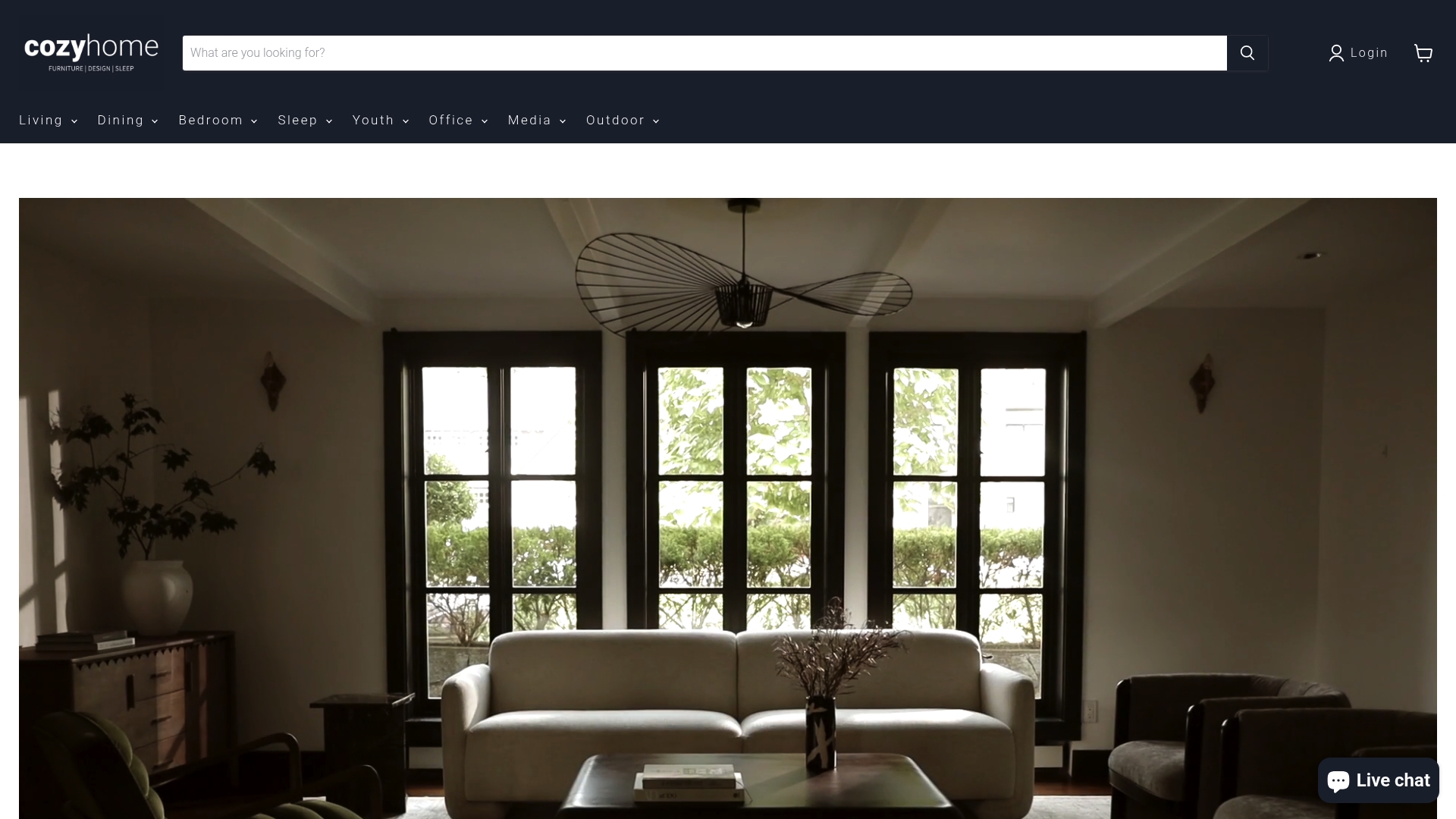
Choosing between a sectional and two sofas gets a lot easier when the piece is actually built for your room instead of the other way around. At cozyhome Furniture, our made-to-order sofas and sectionals come in more than 700 fabric and leather options, so you’re not stuck forcing a standard size into an odd corner or a narrow stairwell.
- Custom sizing means your chaise, module count, and arm style are planned around your specific room, not a warehouse average.
- Guidance is available to help you choose fabric, sizing, and configuration before you commit to anything.
- Modular thinking is built into the planning process, so your layout can change later without starting over.
If you’re weighing a sectional against two sofas and want a plan built around your actual floor plan, visit our made-to-order furniture page or stop by the showroom to start the conversation.
Sources
- Best sofa sectional styles to create an inviting living room | House Digest
- Sectional sofa living room layout guide — Aedifex
- Designers debate sofas vs. sectionals | Architectural Digest
FAQ
What is the 2/3 rule for sofas?
The 2/3 rule suggests your coffee table should be roughly two-thirds the length of your sofa, which keeps the proportions balanced and leaves comfortable clearance on each side. It’s a general styling guideline rather than a strict standard, so adjust it to fit your specific room and traffic patterns.
When should you not use a sectional sofa?
Skip a sectional in open floor plans where it would block walkways between the kitchen and living area, or in rooms where you frequently host guests who need face-to-face seating. Narrow entries, tight stairwells, or oddly shaped rooms can also rule out standard sectional sizes.
Are sectional sofas outdated?
Sectionals aren’t outdated: they remain a popular choice for family-first, TV-centered living rooms because of the relaxed lounging space they create. What has changed is the rise of modular options, which let you reconfigure or split a sectional as your needs shift, something older fixed designs couldn’t do.
Are sectional sofas a good idea?
A sectional is a good idea when your room’s main job is casual, shared lounging, such as movie nights or a media-focused living room. It’s a less ideal fit for formal layouts, frequent entertaining, or open floor plans where a large connected piece would block circulation or sightlines.