

Statement Furniture Pieces for Homes: 2026 Style Guide
TL;DR:
- Statement furniture is a bold piece that serves as a room’s visual and emotional center. It usually features a distinctive silhouette, a strong material or color, and ties the space together without competing with other elements. Experts recommend choosing one statement piece per room, matching it to existing colors, and placing it at the room’s natural focal point to create impactful yet cohesive interiors.
Statement furniture is defined as a single bold piece that acts as the visual and emotional anchor of a room. The best examples of statement furniture pieces in homes share three traits: a distinctive silhouette, a strong material or color choice, and the ability to hold a room together without competing with everything else in it. From sculptural chairs to emerald green sofas and artistic side tables, these pieces reflect who you are the moment someone walks through the door. We put this guide together to help homeowners and renters find the right statement piece, place it well, and make it feel completely at home.
1. Examples of statement furniture pieces homes love most: bold sofas
A sofa is the most powerful statement piece in any living room. It covers the most visual ground, anchors the seating arrangement, and sets the tone for every other decision in the space.

Bold sofa colors are having a real moment in 2026. Popular statement colors include emerald green, saturated terracotta, electric cobalt blue, saffron yellow, and aubergine purple. Each of these reads as intentional and confident rather than accidental.
Shape matters just as much as color. A Chesterfield sofa with its tufted back and rolled arms signals classic drama. A low-slung, curved sectional reads as modern and relaxed. A high-backed sofa with tapered legs brings a mid-century feel that photographs beautifully.
Statement seating styles worth considering:
- Chesterfield sofa in deep jewel tones (navy, forest green, burgundy)
- Curved sectional in warm terracotta or oatmeal boucle
- High-backed sofa with contrast piping or two-tone upholstery
- Velvet accent chair in a saturated single color
- Sculptural lounge chair with an asymmetric or organic silhouette
Pro Tip: Choose an upholstery color that already exists somewhere in your room, even if only in a small throw or artwork. That connection keeps the sofa from feeling dropped in from another space entirely.
2. Sculptural chairs that stand out in any room
Sculptural chairs are the most flexible statement pieces in a home. They take up less floor space than a sofa but deliver the same level of visual impact when chosen well.
Modern design trends favor furniture with matte surfaces, abstract forms, and organic shapes. Designers now incorporate twisted tube frames and donut-shaped silhouettes as deliberate focal points. These forms work because they look like art even when no one is sitting in them.
The Flip Chair by GANG Studio is a strong example of where sculptural seating is heading. Its double-sided finish changes appearance depending on the viewing angle, introducing deliberate ambiguity and encouraging repeated engagement. That quality, a piece that looks different every time you pass it, is what separates a statement chair from a merely attractive one.
Understanding furniture silhouette and style helps you choose a chair shape that complements your existing pieces rather than clashing with them. A rounded chair softens a room full of straight lines. An angular chair adds structure to a space that feels too soft.
3. Artistic side tables as statement accent pieces
Side tables rarely get credit as statement pieces, but the right one can carry as much personality as a sofa. The difference is in the material combination and the form.
The Love Letters “M” side table by designer Maja Stamenkovic is a clear example. Its materials include walnut, marble, brass, aluminum, and plexiglass layered together to form a symbolic and emotional object. The piece operates as a carrier of memory, using abstraction to embed meaning into a functional object. That is a very different thing from a table that simply holds a lamp.
Material combinations that make side tables stand out:
- Brass base with a smoked glass top
- Solid walnut with a geometric cut profile
- Powder-coated steel with a travertine surface
- Mixed metals with a concrete or stone top
- Bent plywood with a natural oil finish
cozyhome furniture carries accent tables that bring this same material-forward thinking into your home. The Cirque Accent Table in Sand and the Kettel Accent Table in Brass are both strong examples of pieces that hold their own visually without competing with larger furniture nearby.
Pro Tip: Place a sculptural side table next to a plain sofa or bed rather than next to another decorative piece. The contrast lets the table read clearly instead of getting lost in visual noise.
4. Natural and organic material furniture as a texture statement
Raw, organic furniture makes a statement through texture and construction rather than color or shape. These pieces work because they show their making. You can see the joinery, feel the grain, and trace the irregularities that prove a human hand was involved.
The Uneri collection is a strong reference point here. Its design uses raw knotted branches finished in matte black enamel, creating a visual tension between the polished surface and the wild, irregular structure underneath. Raw material textures and visible construction have become a defining trend in 2026 interiors. The appeal is that these pieces look like nothing else in a room.
Handcrafted joinery, visible mortise and tenon connections, and live-edge slabs all fall into this category. A live-edge dining table in black walnut, for example, brings the irregularity of nature into a space that might otherwise feel too controlled. The Sakai Accent Table in Walnut from cozyhome furniture follows this same logic, using natural material warmth as its primary design statement.
Pro Tip: Organic furniture reads best against neutral walls and simple textiles. Let the material do the talking. A linen sofa and a concrete floor give a raw wood piece the breathing room it needs to land properly.
5. Sustainable flat-pack furniture with real design presence
Sustainability and strong design are not opposites. The FLAT/FORM collection proves that point directly. It uses century-old Japanese cedar and mechanical joinery to create furniture that ships flat, assembles without adhesives, and can be repaired or disassembled when needed.
That approach matters for two reasons. First, it extends the life of the piece significantly. Second, it makes the construction method visible and honest, which is itself a design statement. A piece that shows you exactly how it is held together communicates a very different set of values than one that hides its structure.
For renters especially, flat-pack statement furniture offers real advantages. You can move it without damage, reconfigure it in a new space, and replace individual components rather than the whole piece. The aesthetic tends toward clean lines and natural materials, which fits well with most existing decor.
6. How to choose and place statement furniture pieces effectively
The one statement piece rule is the most reliable framework for using bold furniture without creating visual exhaustion. Choose a single standout item to anchor the room, then build everything else around it in a supporting role.
Color balance follows a clear structure. The 70/20/10 color rule assigns 70% of the room to a neutral base, 20% to a secondary color, and 10% to an accent. Your statement piece typically lives in that 20% zone. It is bold enough to register but not so dominant that it overwhelms the neutral foundation.
Practical steps for choosing and placing a statement piece:
- Identify the room’s natural focal point (fireplace, window wall, entry point).
- Choose one piece that commands that focal point without blocking it.
- Apply the 70/20/10 rule to confirm the color balance works.
- Avoid competing patterns placed side by side. Use solid colors as visual breathing room around the statement piece.
- Scale the piece to the room. A large sectional in a small room reads as cramped, not bold.
- For renters or those hesitant to commit, statement accessories like bold lamps, unique cabinet hardware, or removable decals add personality without a large investment.
Pro Tip: Stand in the doorway of the room and look in. Whatever your eye lands on first is your natural focal point. That is where your statement piece belongs.
Learning how to choose furniture for the way you actually live makes this process much easier. A piece that looks great but does not fit your daily habits will always feel wrong, no matter how well it is placed.
Key Takeaways
Statement furniture works best when one bold piece anchors the room, connects to the existing color palette, and holds its position as the clear focal point without competing with surrounding pieces.
| Point | Details |
|---|---|
| One piece rule | Choose a single statement piece per room to avoid visual exhaustion and maintain cohesion. |
| Color balance | Use the 70/20/10 rule: 70% neutral, 20% secondary, 10% accent for bold furniture integration. |
| Material as statement | Organic textures, layered materials, and visible joinery create impact without relying on color alone. |
| Scale and placement | Position the statement piece at the room’s natural focal point and scale it to the room’s proportions. |
| Renter-friendly options | Bold lamps, unique hardware, and sculptural accent tables deliver personality without a large commitment. |
Why statement furniture has become personal in 2026
By Dean P.
What I find most interesting about statement furniture right now is that the conversation has shifted away from trends and toward identity. Five years ago, a statement piece meant something expensive or rare. Today, it means something that tells the truth about who lives in the space.
The pieces that genuinely stop people in their tracks in 2026 are not necessarily the most expensive ones. They are the ones that carry a point of view. The Uneri collection uses fallen branches. FLAT/FORM uses century-old cedar and honest joinery. The Love Letters side table uses layered materials to hold emotional meaning. None of these pieces are trying to impress. They are trying to communicate.
What I have noticed working with homeowners is that the biggest mistake is not choosing the wrong piece. It is choosing too many. A room with three statement pieces has none. The restraint required to let one piece lead is harder than it sounds, and it is also what separates a well-designed room from a busy one.
My honest advice: buy the piece you cannot stop thinking about, place it where your eye naturally goes, and then resist the urge to add anything else that competes with it. The room will do the rest.
— Dean P.
cozyhome furniture has statement pieces worth living with
cozyhome furniture carries sofas, sectionals, accent tables, dining chairs, and beds that are built to stand out and built to last.
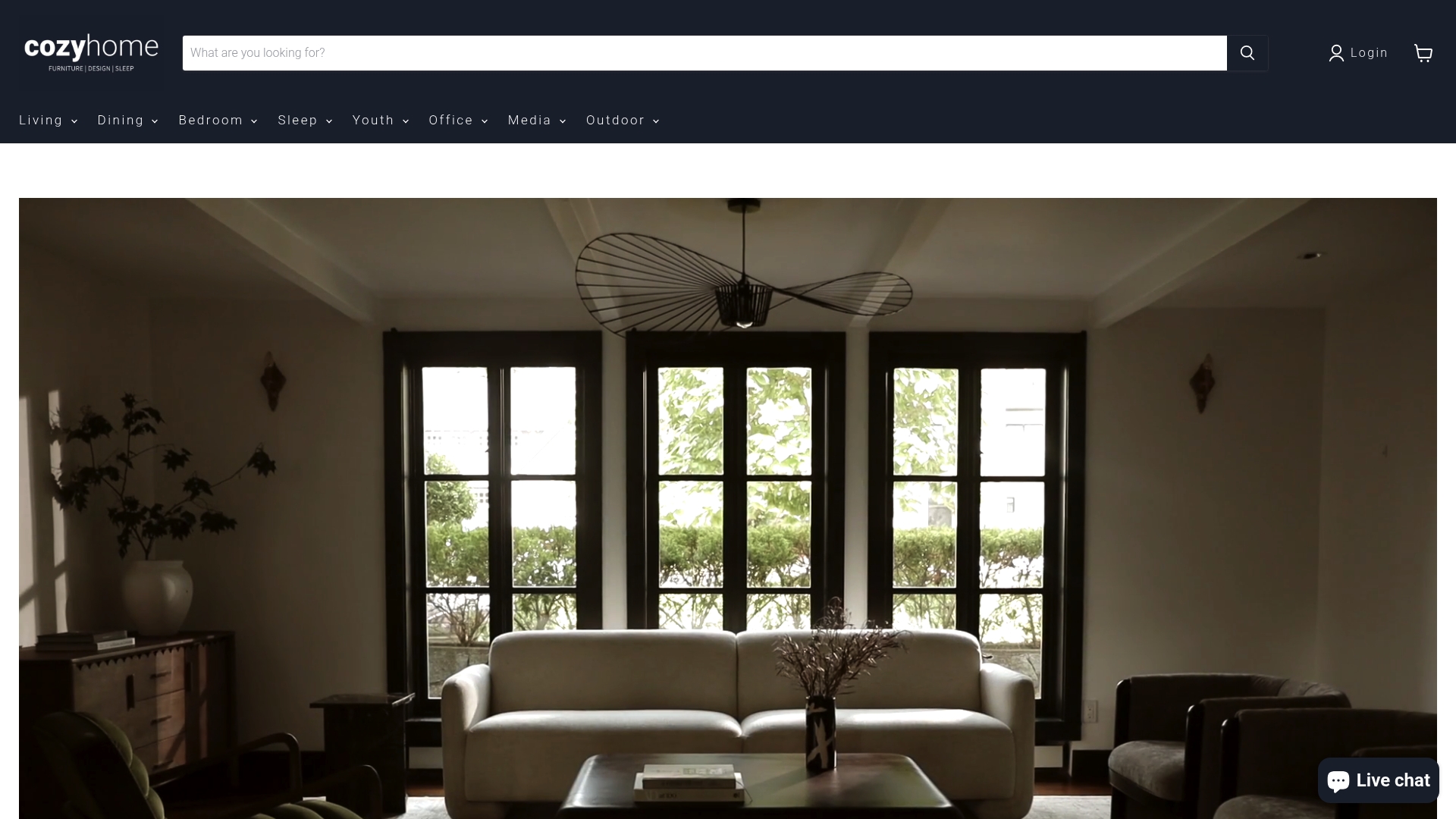
The Koba Sofa in Black is a strong anchor piece for any living room that wants a clean, modern focal point. For dining spaces, the Owing Dining Chairs in Walnut Brown bring warmth and character to the table. Every piece at cozyhome is made to order with over 700 fabric and leather options, so you get the color, material, and configuration that actually fits your space. Visit the Plano showroom or browse the full collection at cozyhomefurniture.com to find the piece that makes your room yours.
FAQ
What is a statement furniture piece?
A statement furniture piece is a single bold item that acts as the visual anchor of a room, defined by a distinctive silhouette, strong color, or unusual material. It draws the eye immediately and sets the tone for the rest of the space.
How many statement pieces should a room have?
Designers recommend one statement piece per room. Multiple competing focal points create visual exhaustion rather than impact.
What are good examples of statement furniture for a living room?
Bold sofas in emerald green or terracotta, sculptural lounge chairs with organic forms, and artistic side tables with layered materials all serve as strong statement pieces in living rooms.
How do I choose a statement piece without overwhelming my space?
Apply the 70/20/10 color rule: keep 70% of the room neutral, use 20% for a secondary color, and reserve 10% for your statement piece. Avoid placing competing patterns directly next to the bold piece.
Can renters use statement furniture effectively?
Yes. Renters can use sculptural accent tables, bold lamps, and unique hardware as lower-commitment statement pieces. These options add strong personality without requiring permanent changes or large investments.