

Keep Wood Furniture Stable at 35–55% RH With Showroom Tested Steps
Keep your home’s relative humidity between 35% and 55%, and treat stability as the real goal, not a perfect number. That’s the range most conservation and forestry sources agree protects solid wood joints, finishes, and panels from cracking, warping, or attracting mold. Grab a hygrometer today, check your reading, and move any furniture that’s tight against a heating vent or a sunny window. The fix is usually that simple.
TL;DR:
- Maintaining indoor humidity between 35% and 55% minimizes risks of cracking, warping, mold, and insect activity in solid wood furniture.
- Sudden humidity swings are more damaging than steady levels, especially quick shifts from dry to humid conditions that cause stress and movement.
- Wood species differ in their humidity tolerance, with softer woods like pine reacting earlier to moisture changes than dense hardwoods like teak.
- Common early signs of humidity damage include sticking drawers, cupped edges, fine cracks, lifting veneer, and finish bloom, which improve with environmental adjustments.
- Using a hygrometer in each main living area and adjusting humidifiers or dehumidifiers accordingly helps maintain stable conditions and protect furniture longevity.
Table of Contents
- Humidity and Wood Furniture: What the Safe Zone Really Means
- How Wood Moves: EMC, Seasons, and Why Panels Crack
- Recognizing Humidity-Related Damage Early
- Monitoring Humidity and Choosing the Right Tools
- Practical Protection Steps for Existing Furniture
- Staining, Finishing, and Humidity: When to Delay Work
- Material Choices for Humid Areas and What to Avoid
- Showroom-Tested Tips From cozyhome for Acclimation and Finish Choices
- Which Humidity Levels Trigger Damage in Different Wood Species
- Practical Perspective: Stability Beats Perfection
- A Straightforward Option for Furniture Built to Last
- Primary Sources and Further Reading
- Sources
- FAQ
Humidity and Wood Furniture: What the Safe Zone Really Means
The safe zone for solid wood furniture sits between 35% and 55% relative humidity (RH), according to conservation guidance from the National Park Service. That’s not a random bracket. It’s the range where wood holds a moisture content low enough to resist rot and mold, yet high enough that it doesn’t dry out, shrink, and split at the joints.
Drop below the lower safe range of relative humidity and wood starts giving up moisture it needs. Joints loosen, veneer edges lift, and thin panels crack as the wood shrinks faster than its finish can flex.
Push past 60% to 70% RH and you’re in different trouble. At around 70% RH, wood’s equilibrium moisture content can climb to roughly 13%, nearly double the 6% to 9% typical of a climate-controlled living room, according to National Park Service curatorial guidance. That’s the range where mold and wood-boring insects start showing real interest in your furniture.
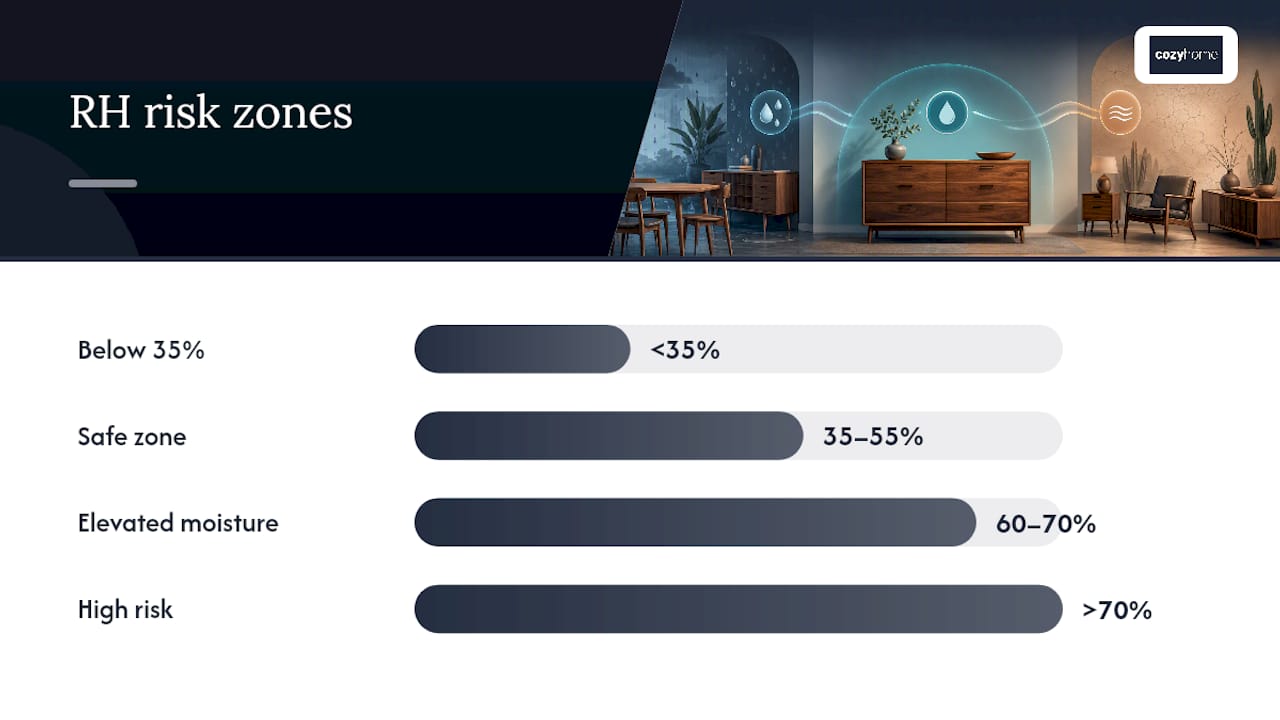
Here’s the number that matters most: it’s not the exact percentage on any given day, but how much that percentage swings. A slow drift from 40% to 65% over two weeks does far less damage than a sudden overnight spike from a shower or a broken humidifier.
Common trouble signs at each extreme:
- Below 30% RH: Cracking, loose joints, gaps in tabletops
- Above 60% RH: Sticky drawers, musty smell, visible mold spots
- Above 70% RH: Active mold growth, insect activity, swollen panels
How Wood Moves: EMC, Seasons, and Why Panels Crack
Wood is constantly trading moisture with the air around it, chasing a balance point called equilibrium moisture content (EMC). As relative humidity rises, wood absorbs moisture and its EMC climbs; as humidity drops, wood releases moisture and EMC falls. Moisture is the single biggest factor affecting how wood performs over time, and even a change of just a few percentage points in moisture content produces movement you can actually see and feel, according to the USDA Forest Products Laboratory.
That movement isn’t uniform. Wood shrinks and swells far more across the grain than along it, which is why a wide tabletop or dresser panel shows problems that a chair leg rarely does. A solid oak tabletop might move noticeably across its width between winter and summer while its length barely changes at all.
This matters for construction, too. Furniture built with floating panels or joinery that allows for that cross-grain movement tolerates humidity swings far better than furniture built rigid, according to Purdue Extension. Rigid construction fights the wood’s natural expansion and contraction, and something eventually gives.
Repeated cycling, not a single swing, is what wears furniture down. Every expansion and contraction cycle puts stress on glue joints and fasteners. Furniture exposed to seasonal humidity changes over many years will show loosened joints long before a table kept in a stable environment shows any wear at all.
Recognizing Humidity-Related Damage Early
Sticking drawers, cupped tabletops, hairline cracks, lifting veneer, and a hazy white film on the finish (called bloom) are the five signs to watch for. Most of these show up seasonally and tell you something specific about what’s happening inside the wood.
- Sticking drawers: Usually swelling from added moisture; often self-corrects once RH drops back into range
- Cupping (edges higher than center): A sign of uneven moisture exchange between the top and bottom of a panel
- Hairline cracks: Typically from wood drying and shrinking too fast; rarely reverses on its own
- Veneer lifting: Glue failure from moisture cycling; needs re-gluing, not a wait-and-see approach
- Finish bloom: Often just trapped moisture in the finish itself, and can clear up as humidity stabilizes
Pro Tip: Don’t force a stuck drawer. Forcing it can crack the drawer sides or the case itself. Bring the room’s humidity down gradually instead, and the wood usually releases its grip within a few days.
Cracks and lifted veneer generally need a repair professional. Sticking drawers and mild bloom often resolve themselves once you get the room back into the 35% to 55% range and give it time.
Monitoring Humidity and Choosing the Right Tools
A cheap hygrometer solves more furniture problems than any oil or polish on the market, because you can’t fix what you can’t measure.
- Place one hygrometer per main living area. A living room, bedroom, and basement each have their own microclimate, so one reading for the whole house isn’t reliable.
- Check readings weekly during season changes. Spring and fall swing the fastest, and that’s when furniture takes the most stress.
- Add a humidifier when readings drop below 35%, which is typical in winter with forced-air heating running constantly.
- Add a dehumidifier when readings climb above 55%, common in humid summers or in basements with poor airflow.
A few notes worth keeping in mind:
- Size the unit to the room. A tabletop humidifier won’t touch a 2,000 square foot floor plan.
- Recalibrate cheap hygrometers against a reference unit every few months. Budget models drift.
- Targeted humidification of the specific room your furniture lives in works better than trying to control the whole house at once, a point echoed in guidance from Oregon State University’s pest information center.
Practical Protection Steps for Existing Furniture
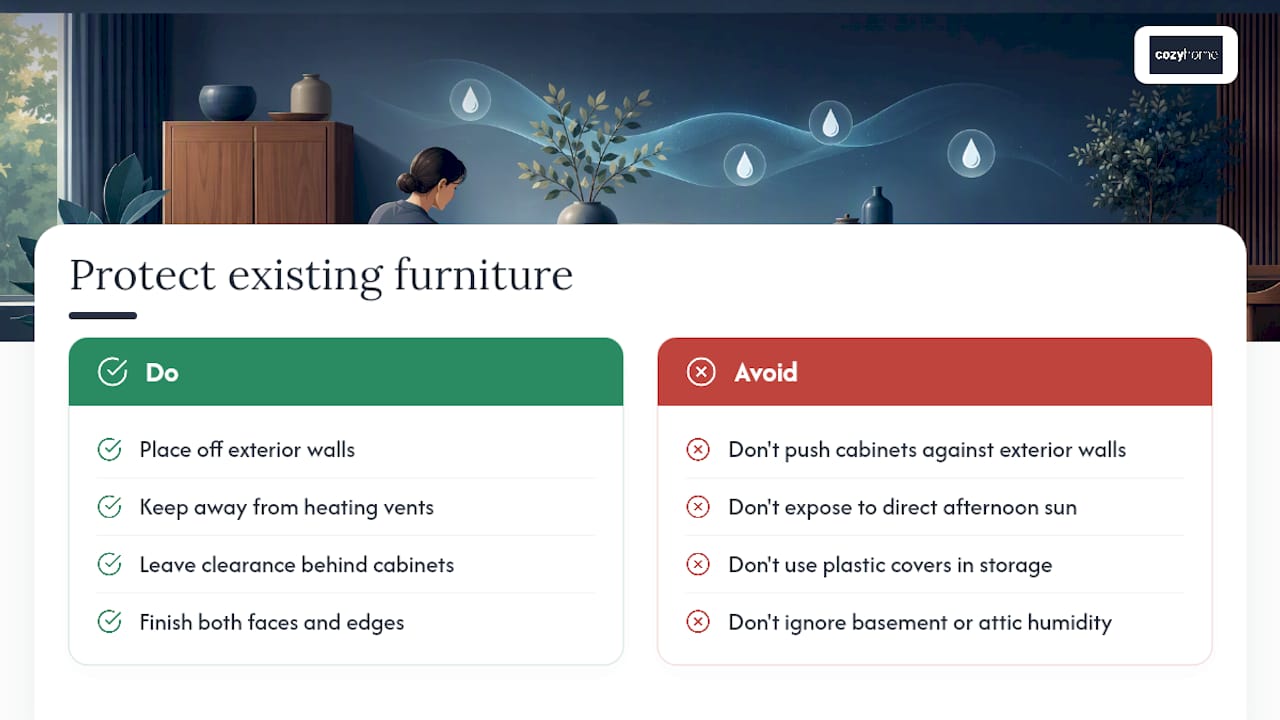
Start with placement, because it costs nothing and fixes more problems than any product you can buy. Keep solid wood furniture off exterior walls, away from heating vents, radiators, and windows that get direct afternoon sun. Exterior walls run colder in winter and hotter in summer than interior walls, which creates a localized humidity swing right where your furniture sits, even if the rest of the room reads normal on a hygrometer. Leave a few inches of clearance behind cabinets and bookcases so air can circulate on both sides of the wood.
Finish matters just as much as placement. A finish that seals only the visible top surface leaves the underside and back exposed, and that’s exactly where uneven moisture exchange causes cupping. Finishing both faces of a panel and sealing cut edges slows moisture movement dramatically and helps prevent the warping that comes from one side absorbing humidity faster than the other, according to Forest Products Laboratory research. Reapply oil finishes on a schedule (roughly every six to twelve months for pieces that see daily use) and check film finishes like lacquer or polyurethane annually for cracks that let moisture in.
Acclimation is the step most homeowners skip entirely. New furniture, or furniture that’s just moved between homes, should sit unloaded in the room it will live in for 48 to 72 hours before you load drawers or push it against a wall. This gives the wood time to adjust to the new EMC gradually instead of shocking it.
Pro Tip: If you’re moving furniture into a basement or attic, check the humidity there before you check anywhere else in the house. Basements often run 10 to 15 points higher than the rest of the house, and attics swing the widest of any room. Both deserve their own hygrometer.
For long-term storage in either space, keep pieces off the floor, use breathable covers instead of plastic, and run a small dehumidifier if the space consistently reads above 55%.
Staining, Finishing, and Humidity: When to Delay Work
Never stain or finish wood when the room’s humidity is running high. Damp wood absorbs finish unevenly, which causes poor adhesion, peeling, and that hazy bloom effect on the surface, according to Oregon State University Extension.
Practical guidelines for refinishing work:
- Wait for a stretch of RH readings in the 35% to 50% range before starting
- Let sanded or stripped wood acclimate in the room for at least 24 hours before applying anything
- Finish both faces of any panel you’re refinishing, not just the visible side
- Allow full cure time (often several days longer than the label suggests in humid weather) before reassembling drawers or doors
Rushing a finish job in damp conditions almost guarantees you’ll be redoing it within a year.
Material Choices for Humid Areas and What to Avoid
Some woods handle moisture naturally better than others, and the difference shows up fast in bathrooms, basements, and humid climates. Teak’s natural oils give it real resistance to moisture damage, and white oak’s tight grain structure makes it a strong performer in kitchens and dining rooms that see regular humidity swings, according to Woodworking Advisor. Cedar works well for closets and storage pieces where moisture resistance matters more than a fine furniture finish.
Materials to avoid or use cautiously:
- MDF and particleboard: Absorb water quickly at any exposed or cut edge, swelling and losing structural integrity fast
- Unsealed veneer edges: A common failure point even on otherwise solid furniture
- Any engineered panel without a sealed core in a bathroom or basement application
If you’re set on an engineered material for a humid space, look for products built with sealed cores and marine-grade or exterior-rated construction, which resist the swelling that sinks standard particleboard.
Showroom-Tested Tips From cozyhome for Acclimation and Finish Choices
We build every piece at cozyhome furniture from kiln-dried stock brought to 6% to 8% moisture content, which matches typical indoor service conditions and limits movement after delivery. Our joinery choices favor construction that allows wood to expand and contract without stressing the glue lines, which is a big part of why pieces hold up through years of seasonal swings.
Our delivery team places furniture with airflow and vent placement in mind, since a spot that looks fine on delivery day can become a microclimate problem over time. If you’re unsure which wood species fits your room’s conditions, our showroom staff will walk through it with you.
Which Humidity Levels Trigger Damage in Different Wood Species
Different species reach their breaking points at different thresholds, largely because of how dense the wood is and how tightly its grain is structured. Open-grained woods like oak and ash tend to show movement sooner than tight-grained species like maple or cherry when humidity swings.
Cracking risk increases the longer wood sits below that line, especially in wide, flat panels like tabletops and dresser tops, since cross-grain shrinkage concentrates stress across the widest dimension.
Softer woods like pine and cedar tend to show swelling and cupping at lower humidity thresholds than dense hardwoods like walnut or teak, simply because they absorb and release moisture faster. That’s useful to know if you own a mix of furniture styles: your pine bookshelf will likely show humidity stress before your oak dining table does, even sitting in the exact same room.
Practical Perspective: Stability Beats Perfection
Chasing an exact number matters less than smoothing out the spikes. A cheap hygrometer and a willingness to move a chair away from a vent solve more problems than an expensive repair ever will.
— Dean P.
A Straightforward Option for Furniture Built to Last
If you’re weighing whether to repair aging furniture or replace it outright, local custom furniture options offer an alternative to guessing from warehouse-floor pieces that were never built with your room’s conditions in mind. Custom furniture pieces often start as kiln-dried stock brought to the moisture range that matches typical indoor living spaces, and knowledgeable staff can guide you through fabric, wood, and configuration choices specific to where the piece will actually sit in your home.
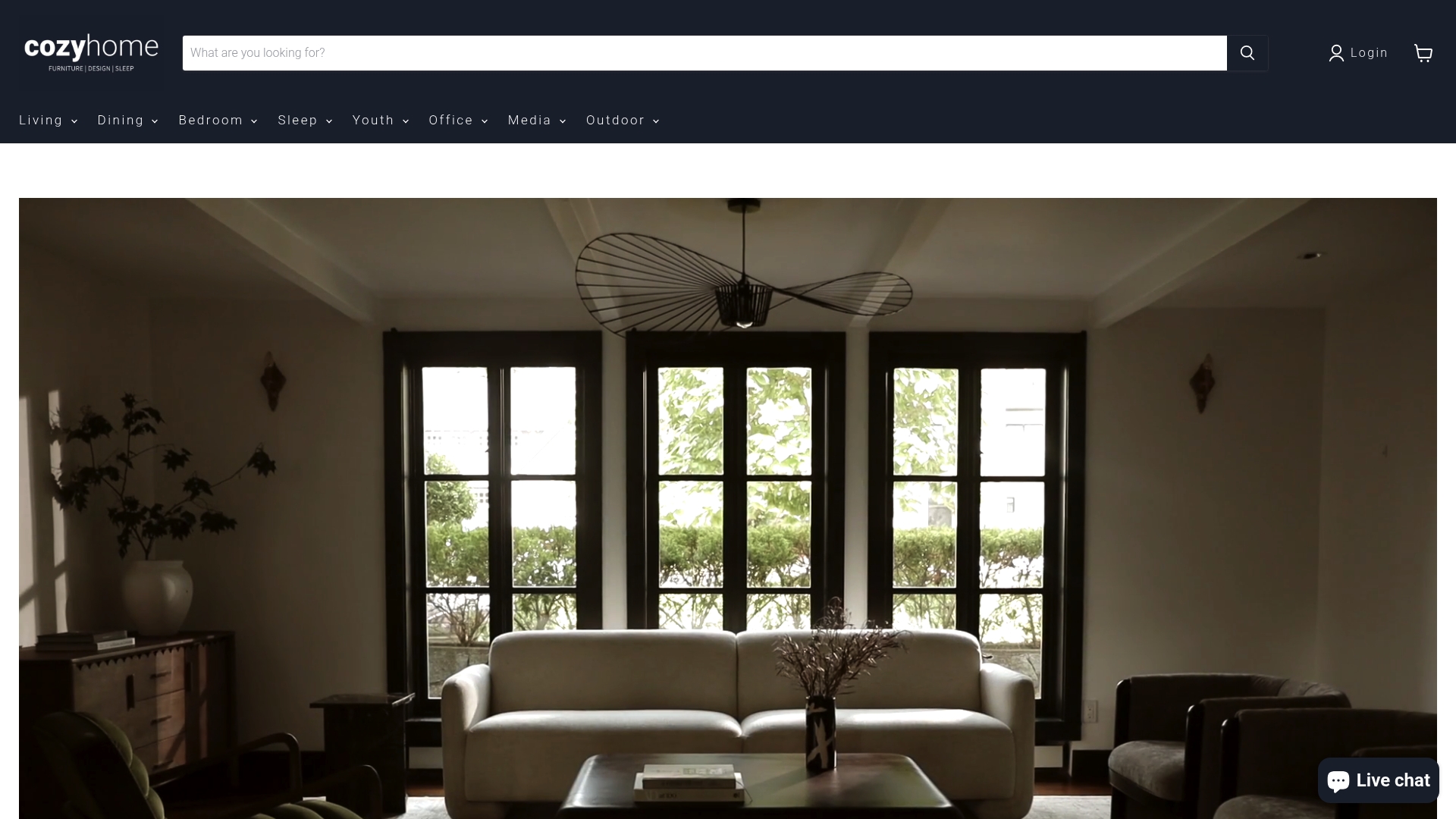
Local furniture delivery and placement handled by experienced teams ensure careful setup considering humidity and airflow, rather than generic freight crews. If you’re ready to look at options, the Excelsior sofa in cream is a good starting point to see the build quality firsthand, or stop by our Plano showroom to talk through what fits your space.
Primary Sources and Further Reading
The technical claims in this article draw on conservation and forestry science rather than general home-improvement advice. For deeper detail, consult:
- Curatorial care of wooden objects, Appendix N — National Park Service
- Wood moisture relationships — Oregon State University Extension
- Moisture-related properties of wood — USDA Forest Products Laboratory
- Wood movement and furniture care — Purdue Extension
Readers interested in how solid wood behaves outside of furniture may also find this partner overview of solid wood interior doors useful, since the same moisture principles apply.
Sources
- Appendix N: Curatorial care of wooden objects (National Park Service)
- Wood moisture relationships (Oregon State University Extension)
- Moisture-related properties of wood and wood products (USDA Forest Products Laboratory)
FAQ
Is 70% Humidity Too High for a Room With Wood Furniture?
Yes.
Should You Stain Wood When the Humidity Is High?
No.