

Furniture Reconfiguration Options for DFW Homeowners
A furniture reconfiguration option is any pre-order choice that changes the physical layout, dimensions, or construction of a custom piece before it is built. Think of it as the decision layer between “I like that sofa” and “That sofa fits my room.” Common examples include choosing a left-facing versus right-facing chaise on a sectional, adjusting seat depth from a standard 22 inches to 24 inches for taller family members, or adding a corner module to turn an L-shape into a U-shape. These are not afterthought upgrades — they are the core of what makes custom, made-to-order furniture different from anything you pull off a warehouse floor.
Typical categories of reconfiguration options include:
- Layout and module count (how many pieces, which shapes)
- Chaise orientation (left-arm or right-arm facing)
- Seat dimensions (depth, height, width per seat)
- Arm and leg styles (track arm, flared arm, tapered leg, metal base)
- Cushion construction (foam density, down wrap, reversible fills)
- Fabric or leather grade (performance weave, full-grain leather, velvet)
- Add-ons (ottomans, storage bases, sleeper mechanisms)
Key Takeaways
A furniture reconfiguration option is a pre-order choice that changes the layout, dimensions, or construction of a custom piece — and getting those choices right starts with measuring your room before you pick anything else.
| Point | Details |
|---|---|
| Define the option first | A reconfiguration option covers layout, dimensions, arm style, cushion fill, and fabric — not just color. |
| Measure before you choose | Leave 30–36 in for walkways and 18 in between sectional and coffee table; mark the footprint with painter’s tape. |
| Verify “custom” scope | Many brands offer fabric-only personalization; true dimension-level customization requires a different production workflow. |
| Get specs in writing | Request an itemized spec sheet covering foam density, frame material, and all configuration choices before signing. |
| cozyhome furniture | The Plano showroom provides in-store consultations, a wide selection of fabric and leather options, American-made products, and free local delivery. |
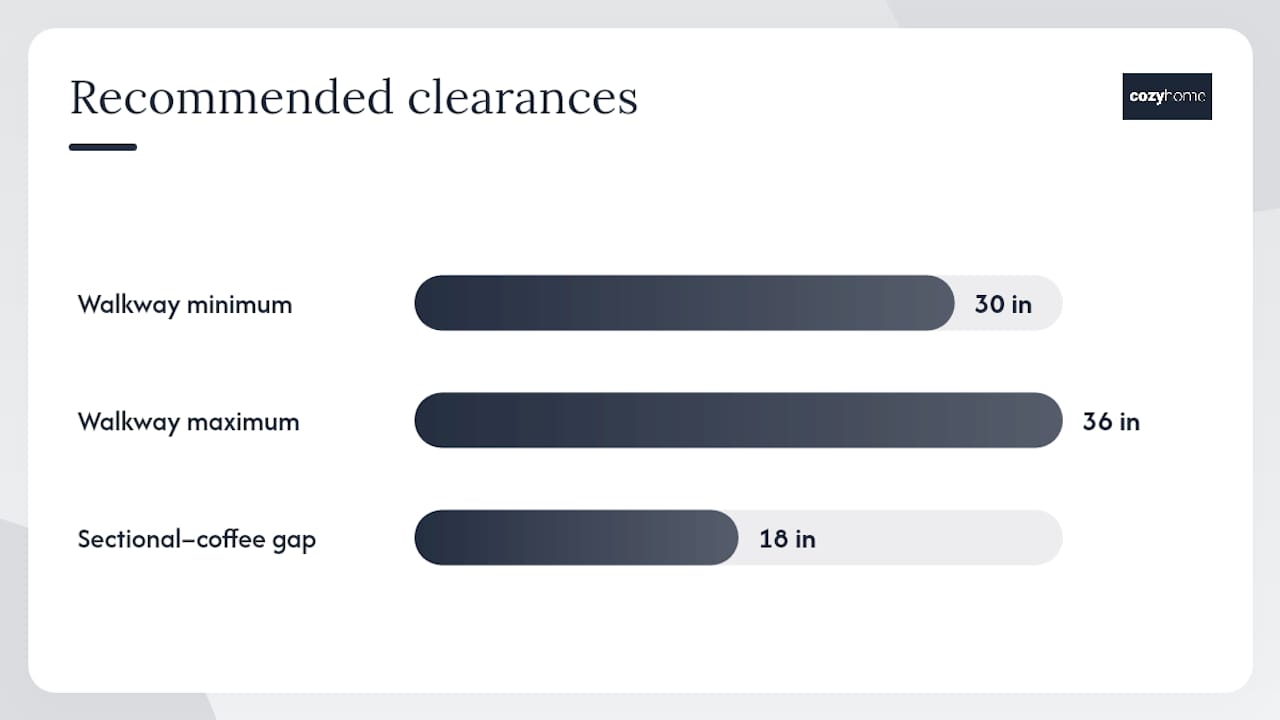
Table of Contents
- What configuration options actually change in your finished piece
- Why configurable furniture pays off for Plano homeowners
- How to choose the right configuration for your room
- How a cozyhome furniture showroom visit guides your configuration
- What to expect on lead times and costs
- How material choices interact with your configuration
- What to bring and what to ask at your showroom visit
- Mistakes to avoid and red flags to watch for
- How cozyhome furniture applies these options to real DFW homes
- What we have learned from helping DFW homeowners configure their furniture
- cozyhome furniture is ready to help you get it right
- Sources
- FAQ
What configuration options actually change in your finished piece
Every configurable axis on a custom order affects something real — visually, functionally, or both. Here is what each one does:
- Module type and count: Determines the overall footprint and seating capacity. Sectionals generally fall into these size categories: small (75–85 inches), standard (95–115 inches), and large (120–156+ inches); adding or removing a module shifts you between these bands. Choose shape (L, U, chaise) to match room function and space.
- Chaise orientation (left/right/reversible): Decides which side of the room the chaise points toward. Getting this wrong is one of the most common and most expensive ordering mistakes.
- Corner and peninsula pieces: Convert an L-shape into a U-shape or wrap-around, which changes how the room feels for entertaining versus everyday lounging.
- Seat depth and height: A deeper seat (24+ in) is more comfortable for lounging but reduces clearance in tighter rooms. Seat height affects how easy it is to stand up, which matters for older family members.
- Arm style: Track arms keep the profile narrow; rolled or flared arms add visual weight and take up more floor space.
- Leg and base style: Metal legs lift the piece visually and make vacuuming easier; wood bases feel warmer and more traditional.
- Cushion fill: High-resilience foam wrapped in down feels plush immediately; all-foam holds its shape longer with less maintenance. Sectional planners document individual module dimensions and typically note a hand-built variance of about 1–2 inches, so plan your clearances with that in mind.
- Fabric or leather grade: Performance fabrics resist staining and wear; natural fibers look beautiful but need more upkeep.
- Removable and reversible covers: Easier to clean, and they extend the life of the piece significantly.
- Add-ons: A storage ottoman doubles as a coffee table; a sleeper mechanism turns a sectional into a guest bed.
Pro Tip: If your room is within 2–3 inches of a standard size, dimension-level customization is worth the extra investment. Many brands sell fabric-only personalization as “custom” — true dimension-level changes require a different production workflow and are rarer than most shoppers expect.
Why configurable furniture pays off for Plano homeowners
The benefits of choosing reconfigurable or custom furniture go well beyond aesthetics. Here is what actually matters for DFW households:
- Perfect room fit: A piece sized to your exact floor plan avoids the awkward gaps or cramped walkways that come with standard sizes.
- Future flexibility: A modular sectional can be rearranged when you move or renovate. You are not locked into one layout for the life of the piece.
- Better ergonomics: Adjusting seat depth and height to your household’s actual body types reduces fatigue and back discomfort over years of daily use. Choosing furniture for how you actually live means those choices are made once, correctly.
- Tailored aesthetic: Arm style, leg finish, and fabric grade let you match the piece to your room’s existing palette rather than compromising.
- Lower long-term replacement cost: A well-specified custom piece built on a kiln-dried hardwood frame with quality foam tends to outlast mass-market furniture by years, reducing the cycle of replacement.
- Multiuse room support: For DFW families juggling a living room that also serves as a playroom or home office, configuration choices like storage bases and reversible cushions add real daily utility.
For everyday family use, synthetic fabric blends usually hold up better than many 100% natural fibers, which tend to require more upkeep — a practical consideration for busy Plano households.
How to choose the right configuration for your room
Measure first. Decide function second. Then pick configuration and fabric. That order matters.
Measurement checklist before you visit a showroom:
- Overall room dimensions (length × width)
- Doorway, hallway, and staircase clearances (the piece has to get in)
- Distance from the focal point (TV wall, fireplace) to where the sofa will sit
- Traffic flow paths — leave 30–36 inches for main walkways and about 18 inches between the sectional and a coffee table
- Relationships to other furniture (dining table, accent chairs, rugs)
Step-by-step decision flow:
- Write down how the room is used: TV watching, entertaining, kids’ homework, napping.
- Mark the sectional’s footprint on the floor with painter’s tape. Walk through it. Adjust until it feels right.
- Visit a showroom and test seat depth and cushion feel in person — do not guess at comfort from a photo.
- Mock up chaise orientation with tape on the floor before committing to left or right.
- Confirm all clearances with the marked footprint before placing the order.
Pro Tip: An experienced maker or showroom consultant translates your usage into specific specs — seat depth, cushion fill, arm style — and helps you balance comfort with long-term shape retention. Bring your room photos and measurements; it saves significant back-and-forth.
How a cozyhome furniture showroom visit guides your configuration
A showroom visit is where measurement, fabric selection, mockups, and final specs come together in one conversation. Here is how the process typically works at cozyhome furniture:
- Appointment: Schedule an in-store consultation. Bring room dimensions, photos, and a rough budget.
- Measurement review: Staff review your room dimensions and photos, flag clearance issues, and suggest configuration options that fit your footprint.
- Configuration mockup: The team walks through module options, chaise orientation, seat depth, and arm styles using floor plans or visual aids.
- Fabric and leather selection: Choose from 700+ fabric and leather options. Staff can pull performance-rated swatches for households with kids or pets.
- Spec confirmation and order: You receive a written spec sheet covering dimensions, materials, and configuration. Review it carefully before signing.
- Production and updates: American-made craftsmanship means the piece is built to your specs, not pulled from a warehouse. Lead times vary by complexity.
- Free local delivery and installation: cozyhome furniture offers free local delivery to Plano and surrounding DFW communities, with installation included.
Trust signals worth noting: in-store measurement service, American-made builds, customer reviews that consistently highlight finished quality and personal attention, and flexible financing options.
Pro Tip: Before your appointment, check cushion tags on showroom floor models. Tags under cushions often list the manufacturer, cushion fill, and foam type — useful for comparing what you are actually buying.
What to expect on lead times and costs
Lead times for made-to-order furniture depend on how much customization is involved. Fabric-only personalization is faster; dimension-level changes require a different production workflow and take longer. Delivery for made-to-order furniture typically ranges from about 3 to 8 weeks, although deeper customization can extend that timeline.
Factors that increase cost and lead time:
- Dimension-level customization (length, depth, height to the inch)
- Specialty or performance fabrics and full-grain leathers
- Complex modular hardware (corner connectors, sleeper mechanisms)
- Built-in storage bases
- Rush production requests
Budgeting tips:
- Ask for an itemized spec sheet so you can see where cost is concentrated.
- Request swatches in two or three fabric grades to compare price points.
- Confirm delivery and installation fees in writing before ordering.
- Factor in the 1–2 inch dimensional variance typical of hand-built pieces when planning tight clearances.
Pro Tip: Verify whether “custom” means dimensions or just fabric. True dimension-level customization is rarer than most shoppers expect and requires a different manufacturing setup — confirm scope before you assume it is included.
How material choices interact with your configuration
The materials you choose affect how your configuration performs over time, not just how it looks on day one.
Fabric vs. leather for modular pieces:
- Performance fabric blends resist staining and wear well for family use; natural fibers look rich but need more maintenance.
- Full-grain leather ages beautifully and cleans easily but can feel warm in Texas summers — worth considering for Plano homes without strong AC.
- Leather on modular connectors can crease at seams over time; fabric tends to drape more forgivingly across joints.
Foam density and seat dimensions:
- A minimum foam density of 2.0 lb/ft³ is a baseline quality indicator; 2.5 lb/ft³ is preferred for everyday use. Higher density foam holds its shape longer, which matters especially when you have chosen a deeper seat.
- High-resilience foam wrapped in down feels softer immediately but requires more fluffing. All-foam cores need less maintenance and retain their depth longer.
Frame materials:
- Kiln-dried solid hardwood frames resist warping and last decades. Mixed-board or particleboard frames are cheaper but more prone to joint failure over time.
Maintenance checklist:
- Vacuum fabric upholstery weekly; spot-clean spills immediately with a clean cloth.
- Condition leather every 6–12 months with a product rated for your leather type.
- Rotate and flip reversible cushions monthly to distribute wear evenly.
- Remove and wash cushion covers per manufacturer instructions if they are removable.
Pro Tip: For a deeper seat (24+ in), choose a high-resilience foam core wrapped in down rather than all-down fill. All-down compresses quickly and loses its depth, which defeats the purpose of the larger seat dimension.
What to bring and what to ask at your showroom visit
Bring with you:
- Room dimensions (length, width, ceiling height)
- Doorway, hallway, and stair measurements
- Photos of the full room from multiple angles, including the focal point
- Inspiration images (Pinterest boards, magazine clips)
- A rough budget range
Questions to ask the showroom team:
- “Is dimension-level customization available, or is this fabric-only personalization?”
- “What is the frame spec — kiln-dried hardwood or mixed board — and where is it manufactured?”
- “What are the cushion fill specs and foam densities?”
- “Which fabrics are performance-rated for households with kids or pets?”
- “What does the warranty cover, and for how long?”
- “Can I see a written spec sheet before I sign the order?”
cozyhome furniture’s in-store team is set up to answer all of these. Common ordering mistakes almost always trace back to skipping one of these questions.
Mistakes to avoid and red flags to watch for
Common buyer mistakes:
- Skipping the painter’s tape mockup and ordering based on photos alone
- Forgetting to measure doorways and stairwells before ordering a large sectional
- Choosing a configuration for style without checking traffic flow clearances
- Ignoring cushion fill specs and discovering the seat depth feels nothing like the showroom sample
- Assuming “custom” includes dimension changes when it only covers fabric
Vendor red flags:
- Vague or evasive answers about frame construction and country of manufacture
- Refusal to share cushion fill specs or foam densities in writing
- Promises of “full customization” that turn out to mean fabric selection only
- Unrealistic delivery timelines that do not account for made-to-order production
Mitigation tips:
- Insist on a written spec sheet covering every configuration choice.
- Request physical fabric swatches — screen colors are unreliable.
- Get delivery, installation, and warranty terms in writing before you pay a deposit.
Pro Tip: Requesting a written spec sheet and a photo of a finished build in a similar setting reduces surprises after delivery and gives you a clear reference point if anything needs to be resolved.
How cozyhome furniture applies these options to real DFW homes
Here are three examples of how configuration choices play out in practice:
- Open-plan DFW living room: A family in Frisco needed a sectional that could anchor a large open-plan space without blocking the kitchen sightline. The solution was a modular sectional with a right-facing chaise and a peninsula piece, configured to 138 inches across — sized to the room, not to a standard catalog option.
- Custom sofa for taller homeowners: A couple in Allen found that the standard seat depth of about 22 inches left them sitting with knees too high. A seat depth adjustment to 24 inches, confirmed during an in-store test, made the finished piece genuinely comfortable for daily use.
- Dining bench configured to a custom table: A McKinney homeowner ordered a dining bench sized to tuck flush under a custom table with a non-standard apron height. The bench height was adjusted by 1.5 inches — a change no mass-market retailer would accommodate.
cozyhome furniture’s Lowtide modular sectional is another example of a configurable piece that can be adapted for different room shapes and seating needs, with fabric selection from 700+ options.
Pro Tip: Ask the showroom team to pull photos of similar configurations built for other DFW customers. Seeing a finished piece in a comparable room gives you a much clearer sense of scale than a product photo on a white background.
What we have learned from helping DFW homeowners configure their furniture
The most common regret we hear from homeowners who ordered without a showroom visit is not about fabric — it is about fit. A sofa that is two inches too deep, a chaise pointing the wrong direction, or a sectional that blocks the hallway are problems that cannot be fixed after delivery. The in-person mockup step, even just painter’s tape on the floor, catches most of them before they become expensive mistakes.
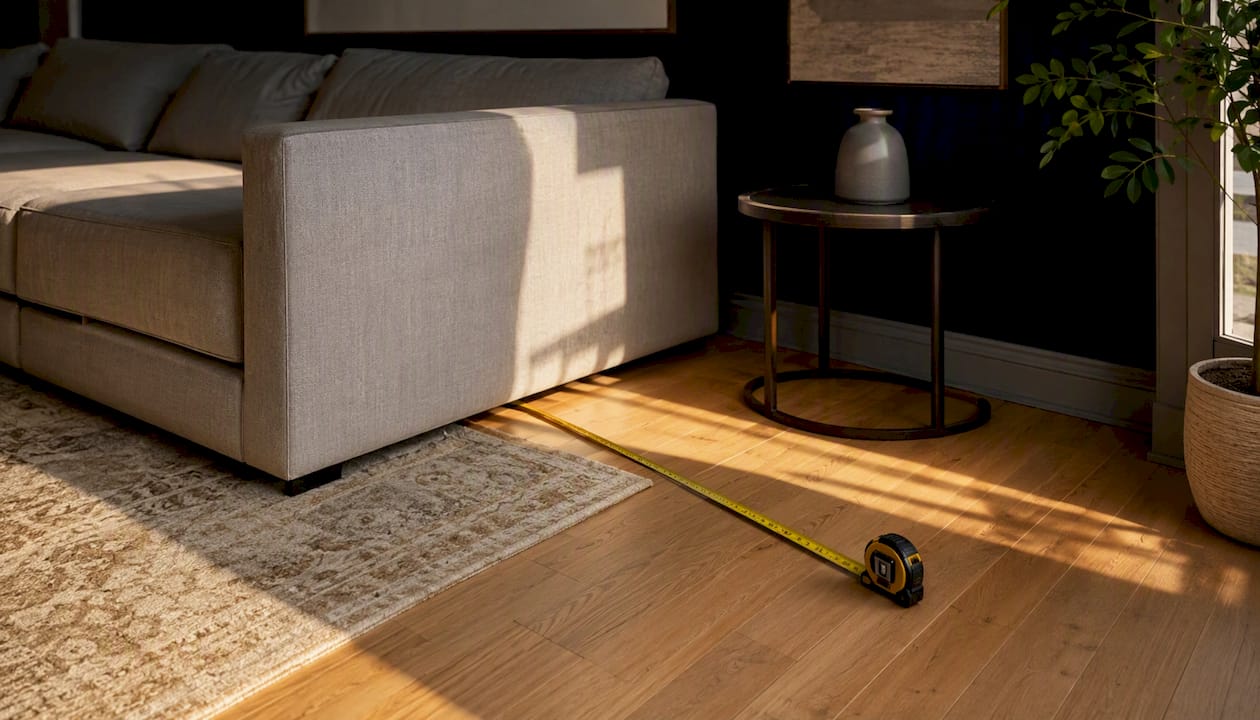
We also think the industry undersells cushion fill as a configuration choice. Most buyers focus on fabric and dimensions, then discover six months later that their seat depth has compressed by two inches because the foam density was too low. Asking for the foam spec is not being difficult — it is the right question.
If you are buying custom furniture for a Plano or DFW home, visit the showroom before you finalize anything. Bring your measurements, test the seat depth in person, and ask for everything in writing.
cozyhome furniture is ready to help you get it right
For DFW homeowners who want furniture built around their room rather than the other way around, cozyhome furniture offers in-store consultations, an in-store measurement service, and 700+ fabric and leather options — all backed by American-made craftsmanship, free local delivery to Plano and surrounding communities, and flexible financing.
Whether you are configuring a modular sectional for an open-plan living room or adjusting seat depth on a custom sofa, the team at cozyhome furniture guides you through every choice — from chaise orientation to cushion fill — so the finished piece fits both your room and the way you actually live in it. Browse the Excelsior sofa to see a configurable starting point, or stop by the Plano showroom to start your consultation today.
Sources
- How to Choose the Right Sectional Sofa Size?
- Custom sofa buying guide
- Liberty Sectional Planner (Sectional part codes and dimensions)
- How to Order Custom Upholstery Like a Pro - Room for Tuesday
- What To Know Before Choosing a New Custom Couch in Toronto - Chisel and Awl
FAQ
What is a furniture reconfiguration option?
A furniture reconfiguration option is a pre-order choice that changes the physical layout, dimensions, or construction of a custom piece — such as chaise orientation, seat depth, module count, arm style, or cushion fill — before it is built.
Is “custom” furniture always dimension-level customizable?
No. Many brands use “custom” to mean fabric selection only. True dimension-level customization, where you specify length and depth to the inch, requires a different production workflow and is less common — always confirm the scope before ordering.
How do I know which configuration fits my room?
Measure your room, mark the footprint with painter’s tape, and leave 30–36 inches for main walkways and about 18 inches between the sectional and a coffee table. Test seat depth in person at a showroom before finalizing dimensions.
How long does a made-to-order piece take to arrive?
Many American-made custom brands deliver in roughly 3–8 weeks. Dimension-level customization, specialty fabrics, or complex modular hardware can extend that timeline, so confirm lead time with your showroom before placing the order.
Where can Plano homeowners get help choosing configuration options?
cozyhome furniture in Plano offers in-store consultations, an in-store measurement service, and guidance through 700+ fabric and leather options, with free local delivery and flexible financing for DFW homeowners.