

How to Build a Cohesive Living Room From Scratch
Build a cohesive living room from scratch by choosing one anchor piece, measuring your room for scale, and layering layout, furniture, and finishes around that single decision. Designers consistently recommend starting with one meaningful choice, whether that’s a sofa like the Quinn - Sectional - Oatmeal or the Koba - Sofa - Maya White, and then letting everything else follow.
Start here today:
- Measure first. Record length, width, and ceiling height before you look at a single product page.
- Pick your anchor. Choose one sofa or sectional that fits the scale of the room.
- Set a budget range. Decide where to spend more (sofa, rug) and where to spend less (accent pillows, throws).
cozyhome furniture’s made-to-order approach, with over 700 fabric and leather options, makes it easier to hit that palette precisely rather than settling for whatever color happens to be in stock.
Pro Tip: Don’t wait until you have everything figured out. One good decision, made with the right measurements in hand, unlocks every decision after it.
Key Takeaways
Building a cohesive living room from scratch comes down to one decision made well, then a clear sequence of purchases built around it.
| Point | Details |
|---|---|
| Measure before anything else | Record room dimensions, door widths, and hallway turns before shopping. |
| Anchor with one piece | Choose a sofa or sectional first; scale and palette follow from that decision. |
| Mix, don’t match | Pair pieces with similar scale but varied finishes and textures for a curated look. |
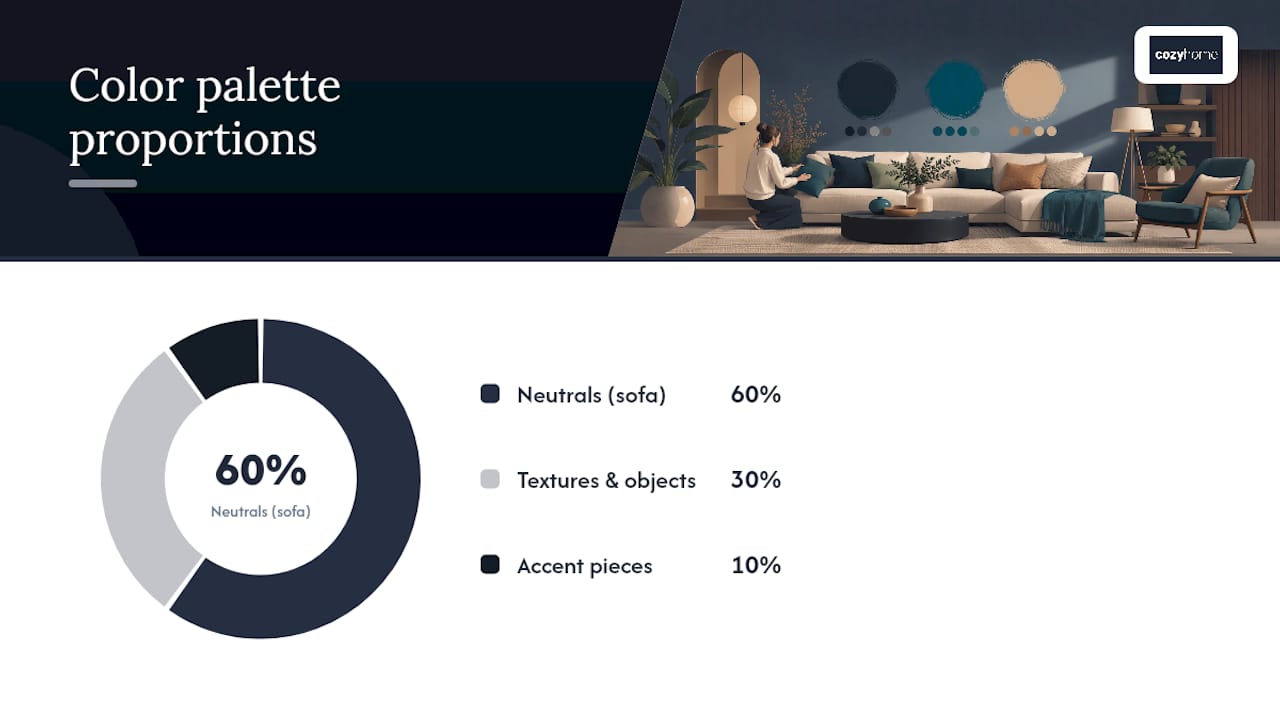
| Use the 60/30/10 rule | Distribute color as 60% dominant, 30% secondary, 10% accent across the room. |
| cozyhome furniture | Made-to-order sofas with 700+ fabric options, sized and configured for your specific room. |
Table of Contents
- How do you build a cohesive living room from scratch?
- How should you arrange a living room for social connection?
- What furniture should you buy first for a cohesive room?
- How do you build a cohesive color palette and layer textures?
- How do lighting and accessories pull a room together?
- How do you budget and plan the timeline for furnishing a room?
- What should you bring to a furniture showroom?
- cozyhome furniture makes the custom process straightforward
- A note from Dean P. on building a room that lasts
- Sources
- FAQ
How do you build a cohesive living room from scratch?
Before you spend a dollar, audit the room. This step takes 20 minutes and saves hours of returns and rearranging.
Measurements to record:
- Room length and width
- Ceiling height
- Window and door opening widths (critical for delivery)
- Distance from windows to floor
- Location of outlets, vents, and built-ins
- Baseboard height (affects sofa leg clearance)
Decide the room’s primary uses:
- Conversation and entertaining
- TV and media
- Reading or quiet work
- Play space for kids or pets
- Multifunctional (combination of the above)
Knowing the primary use shapes every layout and furniture decision that follows. A room built for conversation looks very different from one built around a 75-inch screen. Identify your focal point too: a fireplace, a large window with a view, a TV wall, or a piece of artwork. A recommended order of operations is to measure, set function, set budget, choose main furniture, then layer in rug, lighting, window treatments, and accessories.
Budget framing: Spend the most on pieces that are hardest to change (sofa, rug, lighting fixtures). Spend less on things you can swap seasonally (pillows, throws, small decor).
How should you arrange a living room for social connection?
Living room layouts in 2026 are shifting toward social, multifunctional zones: conversation clusters, reading nooks, and purpose-built small moments, rather than orienting every seat toward the TV.
Primary zone setup:
- Place the rug first. It anchors the seating group and defines the zone.
- Position the sofa facing or angled toward the focal point, not pushed flat against the wall.
- Set the coffee table 14–18 inches from the sofa edge for comfortable reach.
Layout options by room size:
- Small rooms: One sofa plus two accent chairs in an L or U shape. Keep the coffee table low and light.
- Open-plan spaces: Use the rug and sofa back to define the living zone without walls.
- TV-free rooms: Angle seating toward a fireplace or window; add a side table cluster for drinks and books.
Secondary moments worth planning: a reading chair with a floor lamp in a corner, a small game or work table near a window, or a bar cart tucked against a wall. These zones add personality and function without crowding the primary seating area.
For space-saving ideas in tighter rooms, consider nesting tables, wall-mounted shelving, and benches that double as storage.
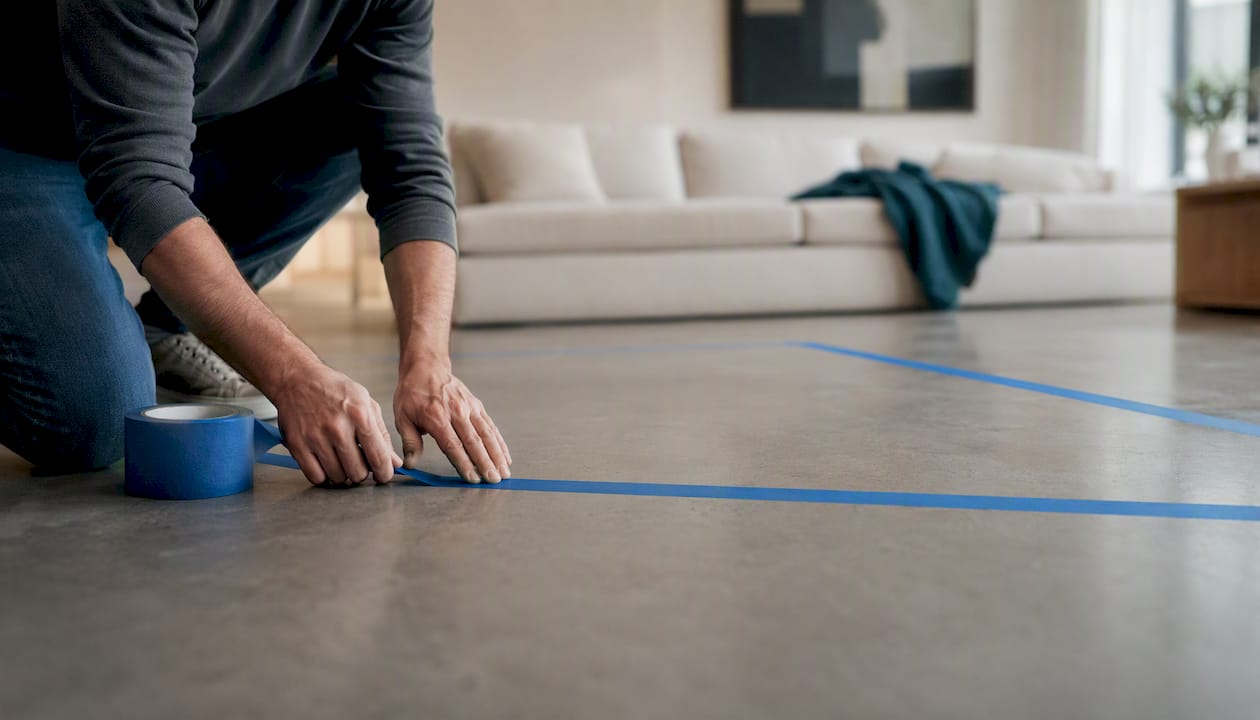
Pro Tip: Use painter’s tape on the floor to outline furniture footprints before you buy anything. Designers rely on this method because it reveals circulation problems and scale issues that no room-planner app can fully replicate.
| Layout Type | Best For | Key Consideration |
|---|---|---|
| U-shape seating | Conversation-first rooms | Needs a larger rug |
| L-shape / sectional | Open-plan or TV-focused rooms | Sofa back defines the zone boundary |
| Floating chairs + sofa | Small or narrow rooms | Keep pathways comfortably wide |
What furniture should you buy first for a cohesive room?
Buy the sofa first. It’s the largest piece, the hardest to return, and the one everything else scales around. Designers recommend starting with large investment pieces and testing layouts physically before committing.
Avoid buying a matching furniture set. Matching sets read as flat and staged. Instead, pair pieces that share a similar scale but vary in finish, leg style, or upholstery. A linen sofa with a leather accent chair and a wood-framed side table reads curated. Three pieces from the same collection reads like a showroom floor.
Pieces worth investing in:
- A sofa or sectional sized to the room (the Quinn - Sectional - Oatmeal works well for larger seating needs; the Koba - Sofa - Maya White suits rooms where a full sectional would overwhelm)
- An ottoman that doubles as a coffee table, adding surface and extra seating
- A modular sectional if your layout might change (the Quinn - Sectional - Oatmeal reconfigures as the room evolves)
Pro Tip: When choosing furniture for the way you actually live, think about daily habits first: do you eat on the couch, do kids pile on, do you host often? Those answers determine fabric weight and configuration more than any trend.
How do you build a cohesive color palette and layer textures?
The 60/30/10 rule is a practical starting point, not a rigid formula.
For longevity, choose neutral upholstery on your sofa. A warm oatmeal, soft gray, or cream holds up across trend cycles and lets you shift the accent color seasonally. If you want a statement piece, put the bold color on an accent chair or a single throw pillow cluster, not the sofa.
Texture layering to add depth:
- Velvet or boucle on accent chairs
- Linen or performance fabric on the main sofa
- A jute or wool rug underfoot
- Natural wood on coffee tables and shelving
- Woven or ceramic objects on surfaces
Always test fabric swatches in the room’s natural light before ordering. A fabric that reads warm gray in a showroom can look lavender or beige at home depending on your window exposure. cozyhome furniture’s in-store consultations include fabric sampling, which removes that guesswork entirely. For more on combining fabric patterns on a single piece, the cozyhome blog walks through the pairing logic clearly.
Pro Tip: Pull your accent color from a piece of art you already love. Art as a color jumping-off point gives the palette a personal anchor that no paint chip can.
How do lighting and accessories pull a room together?
Three lighting layers make a room feel finished and flexible: ambient (overhead), task (reading lamps, desk lamps), and accent (picture lights, shelf lighting). Designers recommend layering all three so the room works day to night and supports different activities without a single overhead fixture doing all the work.
Accessory placement rules:
- Hang art so the center sits at eye level, roughly 57–60 inches from the floor.
- Above a sofa, art should be about two-thirds the sofa’s width.
- Curtains hung close to the ceiling (not just above the window frame) make the room feel taller.
- Rugs should be large enough for at least the front legs of every main seating piece to sit on.
Style surfaces in odd-numbered groupings: three objects of varying heights read more natural than two or four. Leave negative space. A surface with breathing room looks intentional; a crowded one looks like clutter.
Pro Tip: Rotate accessories seasonally rather than buying new ones. Swapping two throw pillows and a vase can refresh a room without touching the furniture.
How do you budget and plan the timeline for furnishing a room?
| Category | Suggested Budget Share |
|---|---|
| Sofa / sectional | About 30% |
| Rug | 15–20% |
| Lighting (all fixtures) | 10–15% |
| Window treatments | 8–10% |
| Accent furniture | 8–10% |
| Decor and accessories | 5–10% |
Custom vs. ready-made:
- Made-to-order: Better fit, more fabric choices, longer lead time (typically 8–14 weeks depending on the maker). Worth it for the sofa and any piece you plan to keep for 10+ years.
- Ready-to-ship: Faster (days to 2 weeks), less customization. Good for accent chairs, side tables, and decor.
Sample ordering timeline:
- Measure and finalize layout (Week 1)
- Order sofa or sectional (Week 2)
- Order rug and lighting while sofa is in production (Week 3)
- Order window treatments (Week 4)
- Receive and place large furniture; order accessories (Week 10–14)
- Style and adjust (Week 15)
What should you bring to a furniture showroom?
Walking in prepared saves time and prevents the most common mistake: falling in love with a piece that doesn’t fit through your front door.
Measure and photograph before you go:
- Door widths at the entry and any hallway turns
- Stair dimensions if the piece goes to an upper floor
- The floor finish (helps with rug color selection)
- Baseboard height (affects sofa leg fit against the wall)
- A photo of the room from each corner
Questions to ask at the showroom:
- What is the lead time for this piece in my chosen fabric?
- Can I customize the dimensions or configuration?
- What is the warranty on the frame and fabric?
- What are the delivery and installation policies?
- What is the fabric’s cleaning code, and is it performance-rated?
- Are financing options available?
Record door widths and hallway turns before any large purchase. A sofa that can’t make the turn at the top of the stairs is a costly problem. Avoid common furniture shopping mistakes by having every measurement written down before you walk in.
cozyhome furniture makes the custom process straightforward
Choosing the right sofa for a specific room is where most people get stuck. cozyhome furniture’s Plano showroom solves that with made-to-order sofas and sectionals, over 700 fabric and leather options, and in-store staff who guide you through sizing, configuration, and fabric selection for your actual space.
The Quinn - Sectional - Oatmeal and the Koba - Sofa - Maya White are two strong starting points for a neutral, cohesive palette. Both are available for viewing in the Plano showroom, where you can sit in them, pull fabric swatches, and talk through configuration options with someone who knows the product. Free local delivery and flexible financing are included. Visit the cozyhome furniture showroom or browse the full sofa and sectional collection at Cozyhomefurniture to find the piece your room is built around.
A note from Dean P. on building a room that lasts
The biggest mistake we see is people trying to design everything at once. They buy a sofa, a rug, a coffee table, and a set of lamps in the same weekend, and the room never quite comes together because nothing was chosen in relation to anything else.
The process that works is simpler: start with one meaningful decision, usually the sofa, and let it set the scale, the palette, and the mood. Every other choice becomes easier once that anchor is in place. For buyers who want help working through that process in person, the cozyhome furniture showroom in Plano is the kind of place where you can take your time, bring your measurements, and leave with a real plan.
Sources
- How to Decorate a Living Room
- 2026 Living Room Trends That Designers Say Will Be Everywhere
- How to Decorate a Living Room, According to Designers
- 45 Refined Living Room Ideas to Dress Up Your Gathering Space | Architectural Digest
- How To Decorate A Living Room In The Right Order: What To Do First: Step-By-Step Guide
FAQ
What should you buy first when furnishing a living room?
Buy the sofa or sectional first. It’s the largest piece and the hardest to return, so every other purchase, including the rug, lighting, and accent chairs, should scale around it.
How do you make a living room feel cohesive without buying a matching set?
Choose pieces that share a similar scale but vary in finish, texture, or leg style. Designers consistently recommend mixing complementary furniture rather than buying a coordinated set, which tends to read as flat and staged.
What is the 60/30/10 rule for living room color?
How long does it take to furnish a living room with custom furniture?
Made-to-order sofas and sectionals typically take 8–14 weeks from order to delivery. Plan to order large pieces first, then layer in rugs, lighting, and accessories while the main furniture is in production.
Can cozyhome furniture help with sizing and fabric selection?
Yes. cozyhome furniture’s Plano showroom offers in-store consultations where staff guide you through sizing, configuration, and fabric selection across 700+ options, so the finished piece fits both the room and how you live in it.